Eljay's Books can find your out-of-print or hard to find favorites!

Eljay's Books now offers a book search function to our customers. We're always happy to ship out of town (and shipping is often no additional charge!) To get started, just click HERE.

Thursday, October 18, 2012

Cinnamon Roll Murder by Joanne Fluke


The Cinnamon Roll Six are the hottest touring jazz band around, and Hannah Swenson is the baker providing sweets for their local gig. When the driver of the tour bus dies behind the wheel and the band ends up in the hospital, everyone thinks that the keyboard player's sprained wrist is the worst thing that could have happened. It's not. Meanwhile, Hannah's ex-boyfriend is about to marry a woman who claims to be the mother of his child, but his friends are suspicious and Hannah is downright miserable about it.

I'd always wanted to read one of Joanne Fluke's books, but hadn't gotten around to it. Kensington Press was a prize donor for the Eljay's Books 2012 Read-A-Thon (it's over but you can check out the prize page and some info HERE) and along with all the great prizes they sent, I got my very own copy of Fluke's March release.

Now there has been a lot of talk about how much reviewers might be influenced by free copies of books. I'm going to get into that in my next blog post, but for now I'm just going to promise you that my enjoyment of this book had nothing to do with it being a free copy. (And if you'd like to discuss this with me I'd be happy to, just wait until I get the next post up and you can look at my whole argument before you respond please)

So, on to the book under review.

I'm a sucker for cooking cozies but until I read this book I never considered for a second that I'd make something from a cozy I was reading. The Chocolate Avocado cookies sound so good, I think I'm going to try making them. And probably the Hamburger Bake too. And maybe the German Pancakes. And while none of this really has that much bearing on how much I liked the book, I'm impressed that the recipes got my attention.

The plot is strong, the mystery is good (although I did figure out who the killer was before the reveal) and the writing is solid. One of the things that always jars me in reading cozies about cooks and bakers is that time seems to magically expand to allow them to make absurd amounts of food while eschewing sleep and mundane things like grocery shopping. Fluke neatly avoids this by making Hannah part of a multi-person business, and her interactions with the people she works with (and her clients) is realistic, as are the characters responses to the events around them. The posturing of the jerky keyboard player and the behavior of the "groupie" type girls touring with the band rang true enough to move away from just being stock characters.

Even the obligatory romantic element wasn't annoying (I have such a sore spot for reading romance, sorry). I have missed the first 14 books in the series, but at the point I started, Hannah's boyfriend has broken up with her because his ex claims to have given birth to their daughter and refuses to let him be part of the child's life unless they get married. Of course the ex is suspect (as is the child's paternity), and Hannah isn't just investigating a murder, she's also trying to find out what is up with this woman. Again, Fluke's writing makes what could be very flat characters in stock situations seem fuller, more real.

My only complaint was that the final reveal may have solved a few too many problems too easily. But honestly, if the last few pages were a little "pat" for my taste, but the rest of the story was so compulsively readable, I can live with it. I will absolutely be reading the rest of this series enthusiastically.


Tuesday, October 16, 2012

WE WON!!!

It's official!!


I'll post a link to the article tomorrow, but for now I'd like to mention that I'm quoted as saying "It's still hard to find people weirder than us."

Sunday, September 9, 2012

Writing what we do not know

In my internet wanderings this week I came across two controversies regarding artists creating characters fairly well-removed from their own daily reality. In both cases these authors faced the wrath of hugely offended groups of readers. Here are the basic scenarios:

In the first situation, an author (white) wrote a book about a mixed-race character. The character lies compulsively, about her race, her gender (when mistaken for a boy she simply doesn't correct the other person) and all kinds of other things. She's also the main character in the book. Many characters in the book are not white, by the way. Objections from some readers ranged from the fact that the author didn't stick to white characters to the perception that the main character's unsavory activities are a statement on non-white people in general. The lies about her gender led to accusations of trans-phobia.  CLICK HERE to read the authors blog on the controversy. After that, you can CLICK HERE to read her update on the fight to change the cover image on the book to one that properly represents the character.

In the second situation a musician I like had problems a few years ago because she and a friend wrote an album. It was a concept album (based completely in fiction) about conjoined twin girls. Saved from death at the hands of a mad surgeon they are almost immediately kidnapped and forced to (among other things) travel with a freak show. Eventually they decide to escape their horrible life and form a band, writing sad songs about their lives and selling CDs over the internet. It's a strange (but good) CD. It's definitely not for everyone, especially with the extremely dark themes and imagery that run almost the length of the album. And in this case people were upset that the protagonists were female and conjoined twins. The breadth of angry blogs, artist responses, angry retorts, etc are far to great for me to give you a list, but The album in question is Evelyn Evelyn, if you want to go googling.

And after spending a few days reading and thinking about these two situations I came up with this:

Artists should always be responsible about researching their characters. Another recent internet explosion was related to an author (white) who wrote a book in which the white characters (referred to as "Pearls") wore blackface to blend in with black people ("Coals"). This, and a variety of other racially charged stereotypes were used in the book in the most offensive ways possibly because the author didn't research the topics she was writing about. But once the artist knows their territory it's really up to them what they do with it. An individual character isn't representative of the REAL people who are in the same social, economic, racial etc. group. It's unfair to judge an artists work in that way unless they say "I mean this white, bisexual, incontinent redhead to represent the attitudes and abilities of all white, bisexual, incontinent redheads everywhere." then you can go ahead and judge. It's also unfair to attack an author as racist, size-ist, whatever-ist because they made a character you don't personally like. If you don't like the art, don't condemn it, just don't consume it.

I asked my very smart business partner and author Frank Oreto about all of this a few days ago. I never write these things down when I need to but I want to close by paraphrasing what he said in response to all of this. "Writing books is like ESP. I put words on paper to represent what's in my head and then you pick those words up and they create a story for you and hopefully you get what I wanted you to. But I'm also writing from my own experience and knowledge, and your experience and knowledge is different. So what are the chances you won't read something differently than I meant it?"

Smart guy.


Saturday, July 28, 2012

Things not to do when writing a cozy mystery...

I normally don't bother to finish, let alone review books I don't like. I don't like to give bad books the time and energy it takes to write a blog post and I don't want to give those books the exposure (limited as it is) either. So last night, when I read a cozy with a great plot, a strong mystery and fairly good characters but a few GLARING issues, I decided that I'd vent my frustration is a more positive way.

If you have ever contemplated writing a cozy, here are a few things I think you should avoid.

1) Mentioning race to show that you are "tolerant". It's a plain old fact that most of your readers will see your characters in their own imagination as their own race, gender, etc until you tell them exactly what is in your own head. But when you point out that one pair of people (who appear for exactly two sentences) are black, you pretty much imply that EVERYONE else in the story is white, otherwise why would you make a big show of letting us know someone wasn't white? Sure the attempt at inclusion is probably coming from a good place, but it doesn't end up that way. Especially when the dishwasher in the restaurant is the only Mexican, the lawyers are the only Jewish people and when the main character imagines her sister in jail she also imagines a black person standing in line for the phones behind her. We get it, we get it, you are white and sometimes you let people who are not white enter your world (except the last example I mentioned which I think was just racist).

2) Mocking androgyny.  Oh, this is absolutely my pet peeve right now. For the record, if you can't tell what gender a person is, that may be their deliberate choice, it may be their genetics. But either way. if that makes you uneasy the problem is yours. Just like small children need to be reminded not to stare at people who look different for one reason or another, apparently today's adults need to be reminded not to mock people that make them uncomfortable. So when you're talking to someone about a transgendered person, or just a very androgynous one, please remember that using terms like "he/she", "it" or just saying "oh, I just can't tell if you're a boy or a girl" is dehumanizing and hurtful (not ever cute, not ever!). Much like you don't know why that guy on the bus has one leg, you don't know why the person in front of you is registering on your radar as gender-neutral and frankly, it's not going to affect your life in any meaningful way. Keep your ignorance to yourself and deal with the human being. Also, if it actually interferes with your interaction to not know if the person identifies as male or female, simply introduce yourself and then refer to them by their name.

3) Goth hate. I identify as a Goth. Before you, as an author, make "goths drink each other's blood and worship Satan jokes" remember that you're perpetuating a harmful and completely inaccurate stereotype about a fairly large sub-culture. Also, like the last item in my list, you're mocking something that is different from your own experience, so aren't you just mocking your own ignorance? (Hint: Yes.) By the way, us Goths have terms for blood-drinkers and worshipers of Satanic forces...we call them crazies and Satan worshipers. Nothing to do with Goth, please move on.

4) Women don't always notice each other's clothing. I could not tell you what I wore yesterday, let alone what any other person I saw wore. Yet in many cozies, like dogs sniffing each others' butts, women not only describe every piece of clothing they are wearing, we have to sit through an explanation, often complete with designer label names, of what ever woman they encounter is wearing. Also, this technique is often used when gay men appear, proving that most cozy mystery authors know very different (and far better dressed) gay men than I do.

5) People who cook professionally do not actually use food metaphors to express themselves all the time. I know this for a fact. You can not make your book's foodie character more authentic by having them compare the sunrise to a pile of eggs and bacon, or by calling a traffic pile up "a bad hash".

Needless to say, I won't be reading anything else by this author.


Friday, July 27, 2012

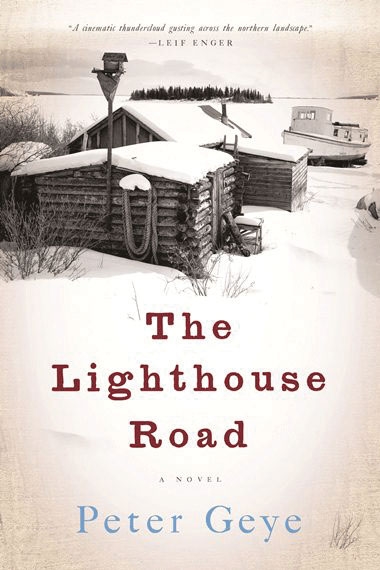
Finally, a new review!! The Lighthouse Road by Peter Geye


I have a bit of a burr under my saddle about the new publishing world lately...as I've mentioned here in the past, the largest publishing houses used to fall all over themselves offering me advance reading copies of books they wanted me to review (and this was pre-blog, so I was really just reviewing them for my own customers). It turns out that they were far more interested in my title as the GM of a big indie store, not so much in my opinion as a small indie bookstore owner (or as a blogger.)

Enter Unbridled Books, a wonderful indie publisher. I first found them reading Emily St. John Mandel's Last Night in Montreal and The Singer's Gun. Since those two great titles (go check them out!!) I've been a fan of Unbridled's darker literary fiction style. Having recently reconnected with my contacts there, I'm thrilled to be able to review a few of their new titles for you. I'm still reading one of the titles I picked up, so you'll have to be context with one review today, but more coming soon!

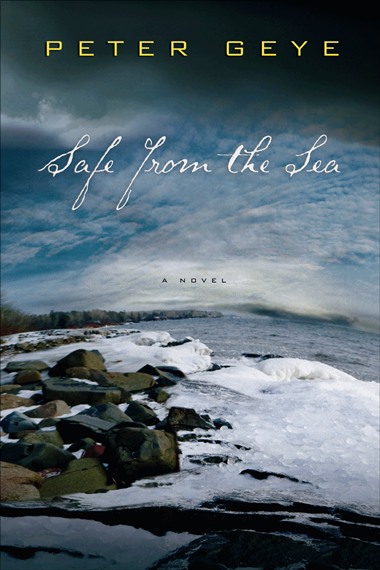
Safe from the Sea

Peter Geye's debut novel, Safe From the Sea was a great father-son tale with a shipwreck story woven in (I read it long enough ago that I can tell you to go read it, but I can't offer a very detailed review...still, it was good enough to bear mentioning here!) So I was eager to pick up The Lighthouse Road.


The Lighthouse Road


The Lighthouse Road follows some familiar themes from Safe in that the father-son relationship is examined (albeit in a very different form) but I think in many ways, Geye goes deeper into his Norwegian heritage and into the ideas he first explored in his other book, and the result is wonderful.

Odd Eide is born to a mother who dies young, adopted by a man who is, in turns, a father-figure, a dissolute and a sharp but morally questionable business man. Hosea Grimm lives by a strict moral code, but one of his own devising, and as a self-appointed guardian of Odd he teaches the boy his various trades including bootleg whiskey running. Hosea's "daughter", while many year's Odd's senior, has been carrying on with the young man behind Hosea's back, leading to some unsurprising problems between the two men. Odd's story moved back in forth on time from the late 1800s, just before and after his birth, to the 1820s as he begins to find his way as an adult.

This is literary historical fiction at it's best, well-crafted, carefully researched, and still completely readable without ever being dragged into what I think of as "researching author disease". (This is, by the way, the tendency of some historical fiction authors to feel the need to fit in every single fact they ever learned on the time period they are writing in regardless of level of interest to the reader) Geye's ability to create a sense of the desolation of wintertime Minnesota logging camps, the cultural isolation of Odd's Norwegian -speaking immigrant mother, the morally bereft yet rigid Hosea's character, is exceptional. Odd's whiskey-running bravado, mixed with his far more unsure internal voice show a protagonist that is believable and never pitiable. Odd's love Rebekah is never quite the victim but never quite the hero either, a tricky bit of characterization to pull off convincingly. (there is so much more I'd like to say about the complex and compelling woman, but I refuse to give anything away at all!!) Geye continually walks the fine line of showing us tragedy and hardship without jerking on heartstrings in a maudlin way. As with Safe From the Sea, Geye is the master illusionist, showing his readers the bits of the story he wants us to see first and then pulling back just a bit more of the curtain, then a bit more, until finally the entire magical whole is visible and we can see how it all fits together.

The trick to reviewing books like this one is that most of the glowingly enthusiastic things I could tell you about the book would also give away plot points, and as I've mentioned, the "reveal" is part of the magic. Suffice it to say that I enjoyed The Lighthouse Road very much, and I think you should read it. And when you have read it, please drop a line in the comments to let me know what you thought! I'd also highly recommend this title to book groups, the number of interesting discussion points here are staggering.

Happy Reading!


Sunday, July 1, 2012

Eva Gabrielsson's There Are Things I Want You To Know


The full title of the book is "There Are Things I want You To Know About Stieg Larsson and Me" and if you've not followed the huge controversy related to the Millennium Trilogy I'll fill you in...

From his 20s until his death, Stieg Larsson was a journalist and the organizer behind Sweden's magazine Expo, dedicated to exposing White Supremacist and Neo-Nazi groups operating in Sweden and elsewhere. He and his partner, Eva Gabrielsson, spent much of their adult lives protecting themselves and being protected by the police against death threats from these groups. Expo's originally publisher dropped the magazine after (I think) 3 issues because of the threats leveled against their offices and staff. The point being, Stieg Larsson was as committed as a person can be to exposing and fighting White Supremacy groups and the people who privately funded their campaigns of hate and murder in and around Sweden.

Stieg Larsson's books know in America as "The Millenium Trilogy" and in their original language as "Men Who Hate Women" grew out of Larsson's own concern for the high rate (sadly, very close to America's own) of unreported or unresolved man on woman violence in Sweden. He created his own avenging angel in Lizbeth Salander, and set her free to wreak havok on a system that oppressed her, her mother and friends like the other hero of the books, Mikail Bloomkvist.  The Millenium Trilogy was meant to be a 10 book series, and at the time of Larsson's death (a heart attack around the age of 53, the same approximate age and cause of death as his mother and his maternal grandfather) a fourth book was being written. 


I want to talk just a bit about the books, only because I have such strong feelings about the series and I know there are still some people out there who haven't read them. First, I want to acknowledge that the violence in these books is extreme and some (but not actually very much of it) is graphic sexual violence. This series is not for someone who can't read about such things, mostly because I think Larsson is utterly successful in removing any sense that rape could be anything other than a violent, hateful violation. The reading of it certainly scars the reader. I think it's extreme enough that people who really can't bring themselves to read this sort of thing should just stay away from it (or skip that part, with the help of another reader who could just mark off the relevant pages to be skipped over). That's also some of the power of Larsson's writing...he accurately and with out glamorizing anything depicts violence as a bad thing that leaves no heroes, no "badasses". Even the mighty Lizbeth is felled for the entire second book by a single bullet and some rough fighting. No heroes, just survivors. At the same time, Larsson wrote some compelling mystery/ thriller/ political espionage (each book has it's own sub-genre nod) that will engage readers to the point of forgoing food and sleep to keep going. While Lizbeth is not (and is never portrayed as) a role-model, neither is the anti-hero Batman, a tortured, emotionally fractured, extremely violent man dressed as a bat with a utility belt. Nonetheless, it's hugely satisfying to watch the Caped Crusader take justice and vengeance into his own hands. So it is with Ms. Salander. She's the terrifying tale oppressors, corrupt government officials, rapists and racists whisper in each other's ears. It's not real, as a matter of fact, never in human history has it been more clear that we as a world-wide culture have no boogey man to send after the powerful, abusive rich. But the vicarious thrill of watching Lizbeth and Mikail set the world right is so satisfying, it almost makes watching the nightly news bearable. 


So on to the book I'm actually reviewing...Product Details

At the time of Steig Larsson's death he had been Eva Gabrielsson's life partner for 30 plus years. The books were entering publication, but no one had any idea what the scope of the series would become. Steig Larsson had not have much, if any contact with his living relations, a brother and father, and he was not legally married to Gabrielsson (interestingly, if they'd had a child together this detail would be irrelevant). The fourth book was more than halfway outlined and partially written and is (still) on a laptop owned by Expo magazine along with Larsson's political writings and his list of informants and sources (which are protected from seizure by laws that protect journalist sources) Everything that I'm going to mention going forward is entirely in dispute and entirely taken from Gabrielsson's version of events.

Gabrielsson's book covers her own childhood and what little Larsson shared with her (both had abandonment issues and chose to focus more on the future than the past) and then focuses on their 30 years together. The final chapters cover the immense legal issues surrounding Larsson's property and the rights to the Millenium books. Here's the basic dispute: Gabrielsson and Larsson, unmarried, have no legal rights to each other's property. By the letter of the law that's pretty much it. Gabrielsson contends that they had planned to get married but between their busy lives, the threat of more danger to Eva if she was connected via paperwork to Stieg, and the hassle of required paperwork made this something they simply put off, always thinking they had more time. At the time of Steig's death, Eva says that he was planning to set up a company they would share in equally that all book royalties would be paid to and all rights to future books assigned to as well, so if one of them was to die the other would take over all money and rights as co-owner of the company. The company, like the official marriage, was something never gotten around to.

Several friends of Larsson's, as well as his father and brother had insisted that Gabrielsson was simply a mistress, and on-again-off again lover with an interest in the massive payday associated with the books. Gabrielsson has always insisted that the money is not at all the issue (and has in fact refused a number of huge payoffs from the family to drop her fight for rights to the works) but the integrity of Larsson's work is her concern. She also refuses to release the fourth book in it's unfinished format to the family, stating her concern that it would not be finished in a way that Larsson would approve (by the way, the working title of book four is The Vengeance of God).

I don't normally follow these legal things, I like books enough to not ruin them with real life...but in this case I had a chance to pick up a copy of Gabrielsson's version of events (signed by her!) and I was just too curious to find out what she would say to miss it. Readers will either believe her or not, but I was compelled by her arguments and I'm going to go so far as to explain why:

1) She's not a good writer. She could be simply the best and most manipulative writer EVER but since she's an architect by trade, I doubt it. She is plain spoken, she is blunt. There is simply no artifice and a rather painful earnestness to her words. Her passion for her work and for Steig's work and for him as a person is plain on every page.

2) She's never made a money grab (that I can find). For two years, unsure of her ownership of the house she and Steig co-owned at his death, she lived out of boxes. Her legal defense fund was set up fairly recently by a third party. She never went to the tabloids or the media for a paid interview. Even the book, which obviously she will profit from, isn't about how wronged she is or how bad other people are, it's about how fervently she wants to guard the legacy of her life partner from being used for financial gain. Of course there is anger, but also forgiveness and sadness.

3) She won't release the fourth book for any amount of money, but she has repeatedly said she will release it if she can finish it herself, following what she knew to be Steig's explicit wishes and values.

The book was a short, but affecting read. I cried when Gabrielsson discussed the last days of her relationship and the pain she felt at Larsson's death. I was stirred when she talked about their commitment to human rights causes, and I just started to re-read the Trilogy at the heart of the whole issue just because reading this book reminded my why the series is so compelling. I recommend this book heartily, and while I feel strongly about the veracity of Eva Gabrielsson's claims I encourage readers to draw their own conclusions and share their thoughts with my in the comments below.




in which I continue to buck the trend by reviewing more books that have been out for a long time

Well, maybe you like those fancy schmanzy book review pages with their "this just in" cutting edge new book reviews. But I own a used bookstore, so most publishers don't grant me the honor of pre-release copies anymore. I do, however, keep right on reading the thousands of millions of books that are already available to the public (often for several years) so in case you are as behind the curve as I am, or you just like to hear my opinion on things (I'm betting on #1) here are reviews for:
Jim Butcher's Dresden Files Ghost Story

Bossypants by Tina Fey

Interestingly, when I pulled the image for this book onto the blog I also spotted this pic of Ms. Fey looking utterly fantastic:


Seriously, this is a really fantastic picture right?
So let's talk about her book first. Bossypants is a series of essay style chapters that are part memoir, part stand up riff. Think of it as Fey performing Weekend Update on the topics of her personal and professional life. Fey's writing is always fresh and funny, her humor is dry and sarcastic and self-deprecating. There's not a lot to pull apart and look at with this book, if you like her, you'll love it. If you don't like her, this book isn't going to change your mind. I happen to think she's one of the funniest people on the planet, so I laughed out loud repeatedly and had a great time reading it. It's also not a deeply confessional book, although there are some juicy behind-the-scenes moments from Fey's TV shows I never really felt like I got to know the author better. I was very impressed that  one of the final chapters each of the 30 Rock writers gets a mention as well as a bit of what the author considers their best writing. (One writer penned the line "Never follow a hippie you just met to a secondary location"...truer words were never spoken) It was both classy and unexpected...like Tina Fey herself.


Jim Butcher's Ghost Story is up next...normally, I'd quickly catch up the reader who doesn't know the series on where we are in the story line but in this case, it's pointless. The series is now thirteen books in. While some books are more directly tied into the core plot than others, this one is entirely predicated on past titles, past alliances between supernatural factions and character development based on incidents that happened many books ago. I can't even explain enough to make a basic plot summary make sense. So here's what I can tell you: Harry Dresden is dead (this happened at the end of the last book, aptly titled Changes) and he is now responsible for finding his own killer so he can move on to some kind of afterlife. Everything else? Well, you'll just have to go read ALL the books. 

If you are a fan of Laurel Hamilton or Charlaine Harris, you could think of The Dresden Files as the male counterpart to their supernatural investigation series. Butcher writes a better magic-users world, in my opinion. His magic follows what could be recognized as some kind of logical, physical laws and also would be more palatable to the real, human breed of magic user than some of the aforementioned authors. Like Hamilton's Anita Blake books, the writing cries out for a continuity editor, but unlike Hamilton, Harry Dresden's storyline never descends into soft-core porn, so points for that. In short, if you haven't started the series and you are the least bit curious about it, I think you should run out to Eljay's (or call us) and get the series.

**If you have not read the series and you want to, please stop reading now (and come back to this after you read books 12), spoilers ahead***

For those of you who have already read the preceding books,  I'd rate this one slightly below the average quality. A lot happens, which is always good in a plot-driven book. Molly gets a major character-angst upgrade and so does long-suffering Murphy. Having wiped out the Red Court, Dresden has closed-out a huge number of storylines from earlier books...Susan, their daughter, Mab's pursuit of Dresden as the Winter Knight, all resolved. 

***end spoilers***

This combined with Dresden's lack of physical presence give the whole book a bit of "nowhere to go" feeling. Dresden has always been a bit neurotically-stuck-in-his-own-head for me, but when all he is amounts to his thoughts (and most of his thoughts amount to "oh no, I have no body!"), it's downright annoying. While the end of the book is satisfying and opens a whole new set of problems and character paths for Dresden, Molly and Murphy, I can't help feeling like this would have made a great short story or even a novella rather than a full length book. Still, I'm happy to hear that a contract for many more book was just signed, especially since rumors abounded a few years ago that Ghost Story would be the series finale.